In the late 1970s and early 1980s, the Ministry of National Defence’s Z181 Factory produced Việt Nam’s first semiconductor components, diodes and transistors for domestic use and export to Eastern Europe. The industry has advanced remarkably since.
Việt Nam’s semiconductor industry offers the country an opportunity to shift from a growth model heavily reliant on low-cost labour and manufacturing toward more technology-intensive, higher value-added sectors, according to Nikkei Asia.
Intel is relocating part of its semiconductor production lines from Costa Rica to its facility in HCM City-based Saigon High-Tech Park, signalling a deeper commitment to Việt Nam as a primary strategic pillar in its global manufacturing network.
Vietnamese companies have also gradually joined the global value chain by improving their capabilities in chip design, production and related services. Notably, a semiconductor chip manufacturing plant project developed by the Viettel Military Industry and Telecoms Group (Viettel) has already...
The Alliance for Research and Training in Semiconductors and Microelectronics (ARTSeMi) for the 2025–30 period was officially launched at a forum in HCM City on Thursday.
France''s Dassault Systèmes pledged to help strengthen Việt Nam’s innovation-led ecosystem and build a strong digital workforce by applying global expertise, industry best practices, and advanced digital twin solutions.
Amid growing global demand, fragile supply chains and intensifying geopolitical conflicts, Việt Nam is rapidly emerging as one of the most promising players in the global semiconductor landscape, a seminar heard in HCM City on July 2.
Bắc Ninh will focus on the in-depth development of the semiconductor industry, establish a centralised information technology zone, and train a highly skilled workforce comprising engineers and microchip specialists.
Việt Nam will send its largest-ever delegation, to the 30th SEMICON Southeast Asia 2025, aiming to enhance cooperation with regional semiconductor enterprises.
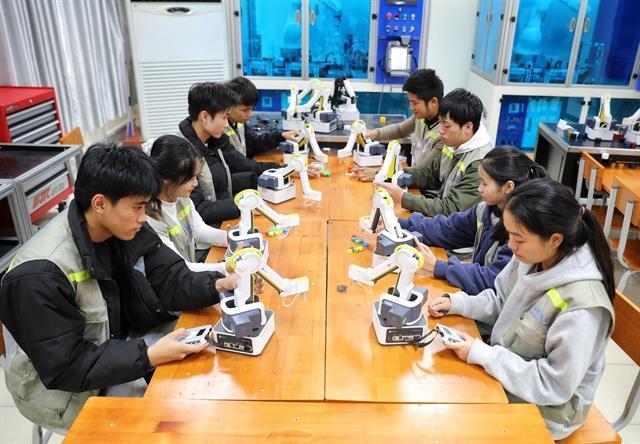
Bắc Giang Province is preparing for significant growth in the semiconductor industry, with an estimated demand for around 6,300 workers in the 2025-2030 period.
Prime Minister Phạm Minh Chính on Saturday signed a decision issuing the strategy for developing Việt Nam’s semiconductor industry by 2030, with a vision to 2050.